
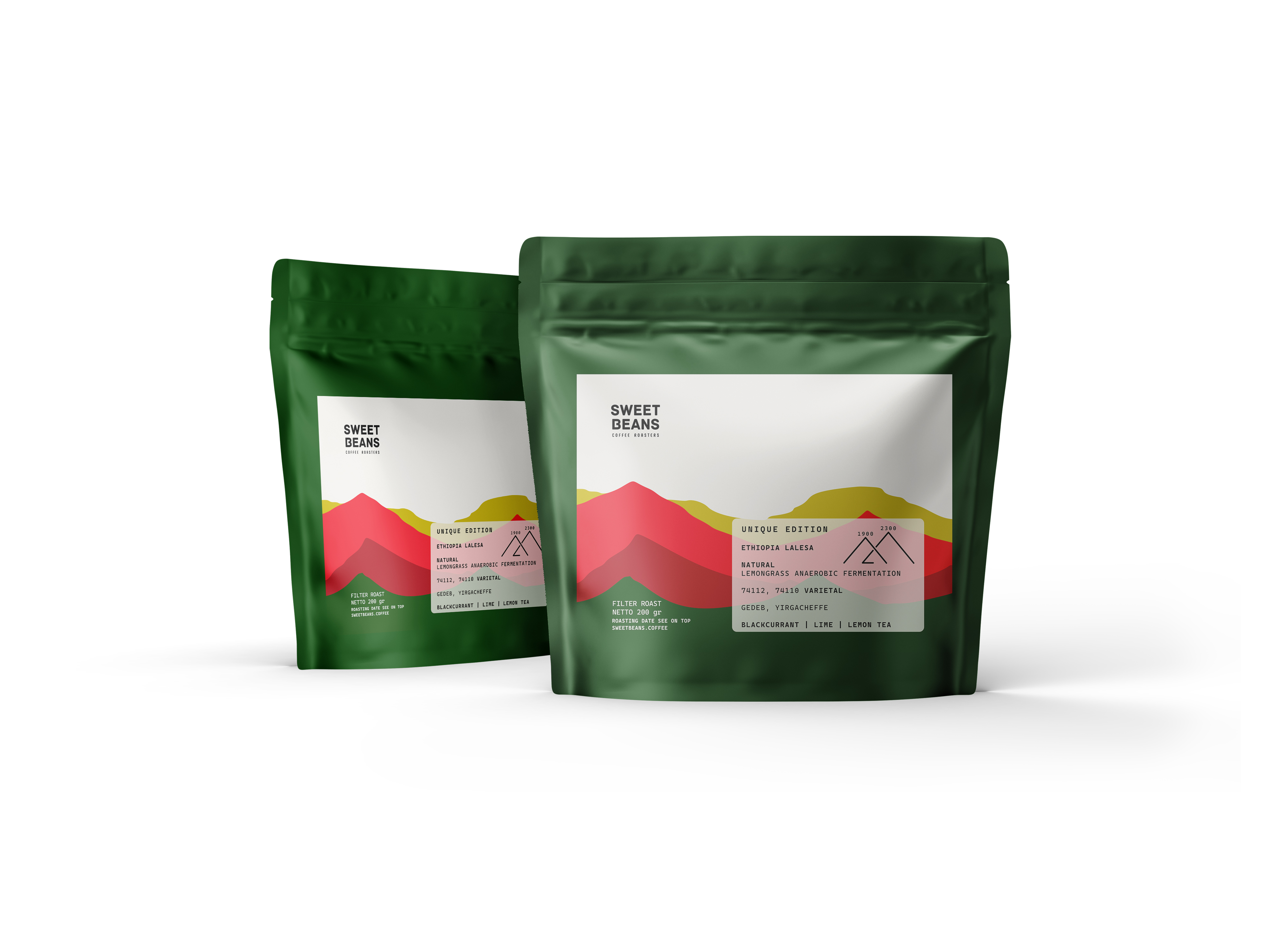
Ethiopia Lalessa Lemongrass
Price range: 24,00 € through 79,00 €
For this special process coffee, selected ripe cherries are placed into sealed, oxygen-free fermentation tanks together with a specific plant or fruit, depending on the intended fermentation style. The tanks create a controlled anaerobic environment by limiting oxygen exposure. Fermentation is carried out for approximately 5 to 10 days. During this period, controlled fermentation conditions influence the development of the coffee while maintaining a structured process that can be repeated and managed by the processing team. The profile includes special fermentation approaches – lemongrass fermentation. The coffee cherries are fermented in sealed tanks with the chosen botanical or fruit ingredient as part of the anaerobic processing method.
The coffee is produced by smallholder farmers operating under a vertically integrated model with EDN Ethiopian Coffee Export PLC. The farm structure allows EDN to work directly with producers in the Chelchele area while supporting them through financial assistance, subcontracting opportunities, and premium payments. This model is designed to maintain quality control from farm level through processing, milling, and export, while also supporting sustainable production and stronger farmer relationships.
The coffee is grown at elevations between 1,900 and 2,300 meters above sea level. The high-altitude conditions of Gedeb, combined with the region’s fertile soil and favorable climate, create a strong environment for slow cherry maturation and high-quality coffee development. The soil is described as red clay, well-drained, and fertile. The area receives approximately 1,200 to 1,599 mm of rainfall per year, supporting coffee cultivation alongside traditional farming practices. The varieties listed for this lot are 74112 and 74110, two Ethiopian selections commonly associated with quality-focused production.
Fermentation
For this special process coffee, selected ripe cherries are placed into sealed, oxygen-free fermentation tanks together with a specific plant or fruit, depending on the intended fermentation style. The tanks create a controlled anaerobic environment by limiting oxygen exposure. Fermentation is carried out for approximately 5 to 10 days. During this period, controlled fermentation conditions influence the development of the coffee while maintaining a structured process that can be repeated and managed by the processing team. The profile includes special fermentation approaches – lemongrass fermentation. The coffee cherries are fermented in sealed tanks with the chosen botanical or fruit ingredient as part of the anaerobic processing method.
After fermentation, the coffee continues through natural-style drying. The cherries are placed on raised drying beds and dried under the sun. During drying, workers monitor and manage the cherries to support even moisture reduction and avoid defects. The drying stage is an important part of the process because the coffee remains in its fruit while moisture is gradually reduced. The use of raised beds improves airflow around the cherries and helps support more consistent drying. Workers turn and sort the cherries during this stage, removing unsuitable material and helping preserve the quality of the lot.
| Weight | 0,200 kg |
|---|---|
| weight | 200 gr., 500 gr., 1000 gr. |
Related products