
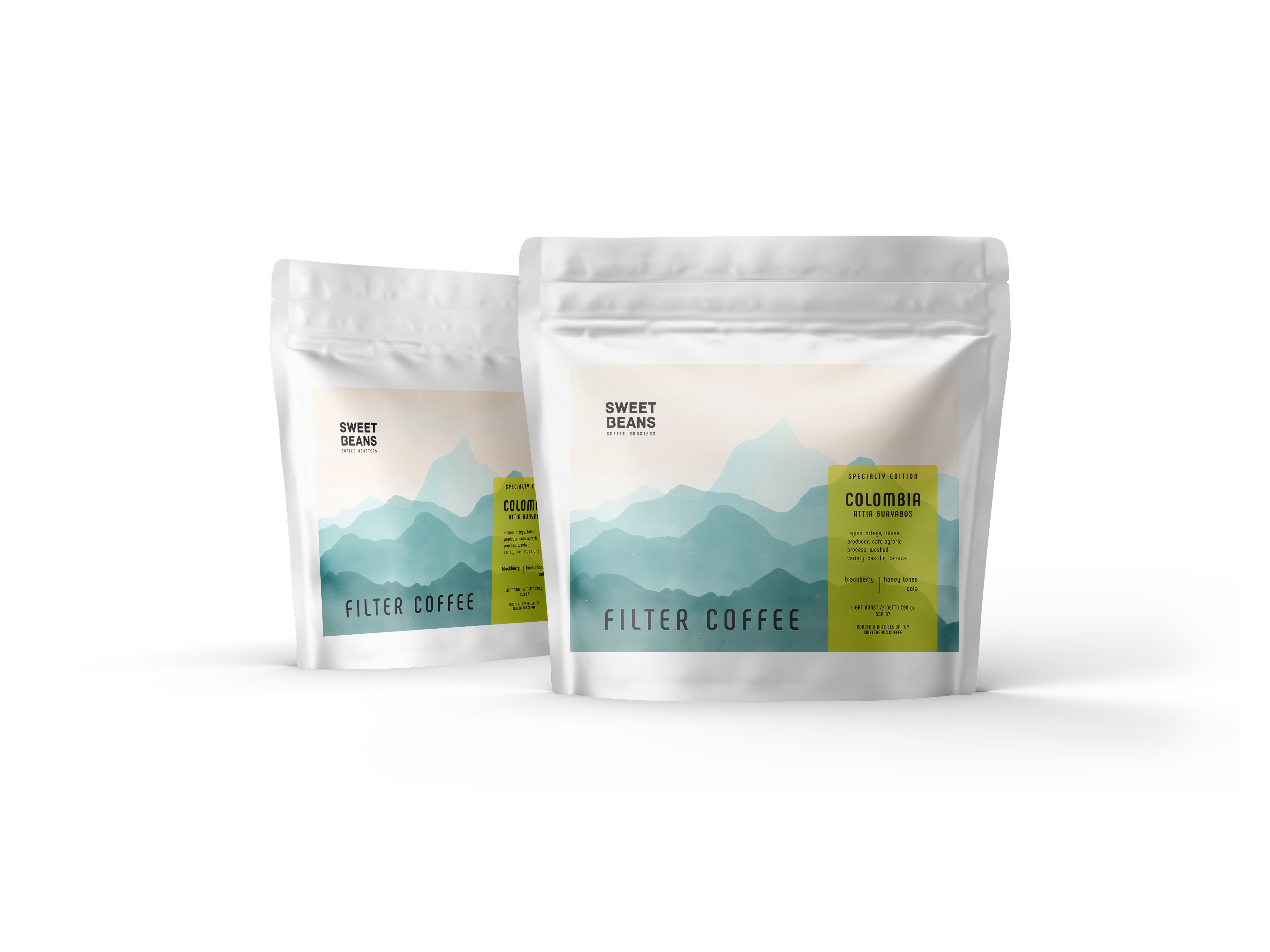
Colombia Attia | washed
Price range: 14,00 € through 49,00 €
This coffee comes from 35 smallholder producers based in the Ortega region of Tolima, Colombia, who belong to an association called Cafe Agrario.
Primary flavour note: Blackberry, red plum, honeyed tone, red fruit, dark chocolate, sweet finish, cola
This coffee comes from 35 smallholder producers based in the Ortega region of Tolima, Colombia, who belong to an association called Cafe Agrario.
Cafe Agrario has faced several challenges over the years. The region has been affected by Colombia’s civil conflict, and the association also struggled with poor leadership in its early years. Although the group was founded in 2014, members only discovered in 2017 that it had never been officially registered as an association due to administrative mismanagement. In addition, producers experienced financial losses when coffee was sold on credit to buyers who never paid for the delivered coffee.
In recent years, the association has shifted its focus toward specialty coffee as a way to increase the value of their production. They have also begun roasting and selling coffee locally.
Siruma, our specialty export partner in Colombia, has invested in supporting this community. Their agronomist, Pilar, has been providing workshops on coffee processing and helping the group improve the organizational structure of the association. This need was identified through baseline data collected during early assessments. Producers have also received cupping training, allowing them to better understand and evaluate the quality of their own coffee.
The association aims to continue developing and hopes to establish its own warehouse and purchasing station, where members can deliver coffee directly to Siruma. This would allow them to become more vertically integrated within the supply chain and gain greater control over the sale of their coffee. Recently, the association delivered their first coffee shipment directly to Siruma, marking a significant milestone in their progress.
Since 2020, the association has been certified organic. Members produce their own organic fertiliser, which is distributed among the farmers. They have also invested in training on improved wastewater management to help protect the local environment.
During harvest, coffee is picked approximately every 20 days, with pickers receiving a premium for selecting fully ripe cherries. After harvesting, the cherries are taken to the beneficio (wet mill) where they are pulped and fermented for 24 hours in tiled tanks. The coffee is then washed three times before being placed on African drying beds to dry.
| Hmotnosť | 0,200 kg |
|---|---|
| weight | 200 gr., 500 gr., 1000 gr. |
Súvisiace produkty