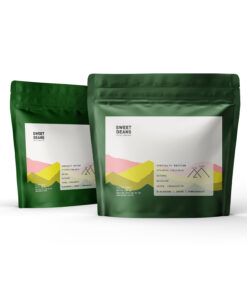

Colombia Chapata
Price range: 14,00 € through 55,00 €
Luis Miguel invested in a Nuna Coffee drying box, which can regulate temperature and humidity to dry the coffee. These boxes were pioneered in Colombia to help address the extremely challenging and ever-changing daily climates in the Colombian Andes. To start this project, they selected a few local producers known for quality and purchased cherry at above the regular market price. The cooperative then set up a sorting station to select the ripest cherries and improve uniformity. The varietal used in this lot is Castillo.
After selection and separation, the coffee is washed and fermented in sealed barrels for 96 hours. It is then placed in the drying box and dried at 35–40°C for 100–120 hours.
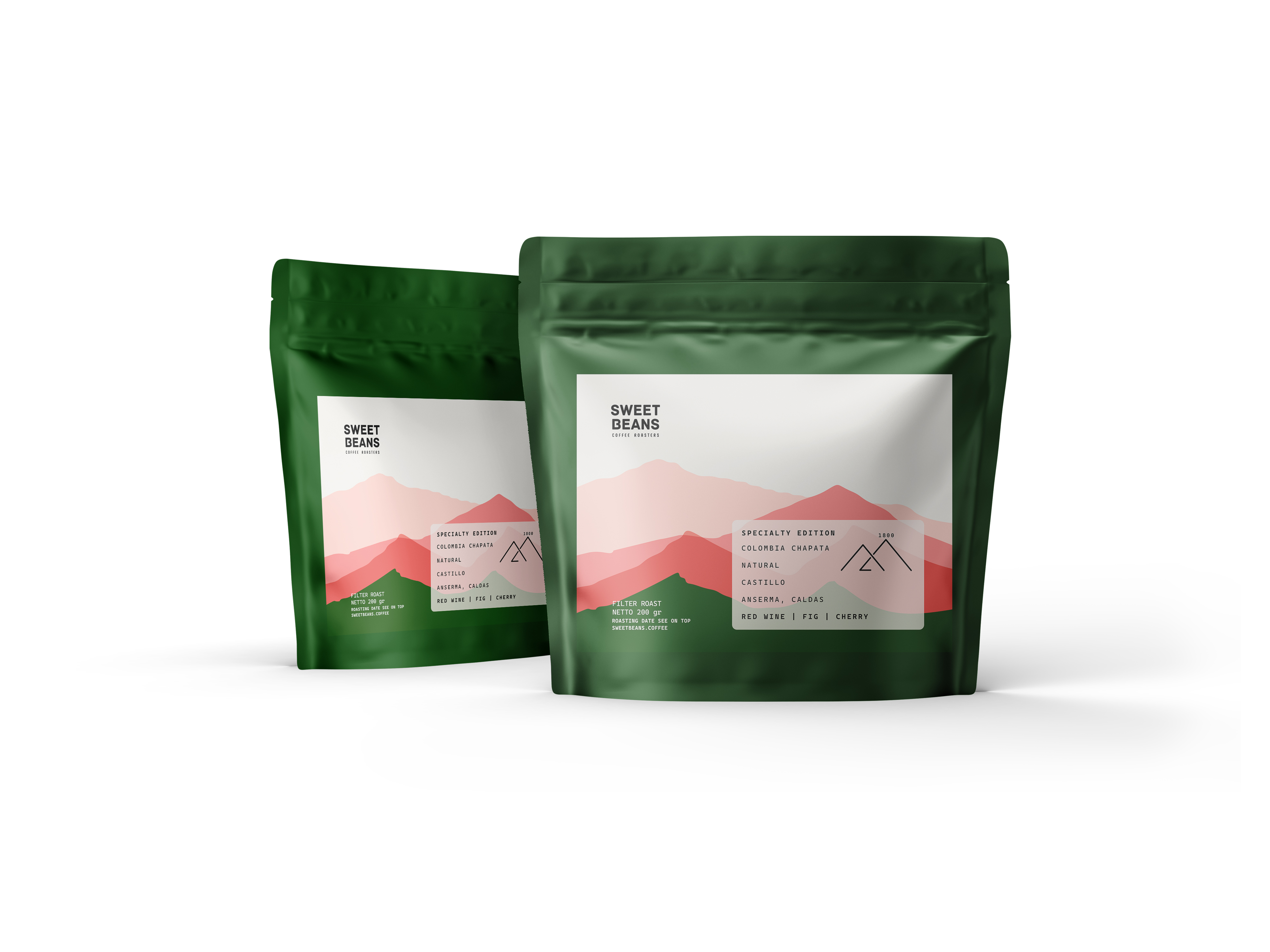
Primary flavour note: Red wine, fig, cherry, cranberry, cinnamon and toffee.
Anserma is located in the western part of the department of Caldas. It is an agricultural centre where coffee cultivation stands out.
The cooperative began operating in 1967. It has extensive knowledge and experience in coffee commercialisation, and it is supported by the National Federation of Coffee Growers of Colombia and the Departmental Committee of Coffee Growers of Caldas. It operates in the municipalities of Anserma, Risaralda, San José, Belalcázar, and Viterbo.
Its main purpose is the commercialisation of coffee and other agricultural products, seeking to promote and improve the economic, social, technical, and cultural conditions of its members, as long as they are linked to agricultural activity—especially coffee production in all its forms.
The cooperative has 2,083 member coffee growers who cultivate excellent-quality coffee with dedication and passion. In addition to coffee, they also grow crops such as sugarcane and bananas to sell for extra income.
Under its new General Manager, Luis Miguel, the cooperative has looked to embrace technology and the shift toward specialty coffee production. They have been building temperature-controlled areas in the warehouse to store and protect the microlots delivered by producers. In addition, the cooperative has started experimenting with producing natural-process coffees for the first time, without putting the risk on the producer.
Luis Miguel invested in a Nuna Coffee drying box, which can regulate temperature and humidity to dry the coffee. These boxes were pioneered in Colombia to help address the extremely challenging and ever-changing daily climates in the Colombian Andes. To start this project, they selected a few local producers known for quality and purchased cherry at above the regular market price. The cooperative then set up a sorting station to select the ripest cherries and improve uniformity. The varietal used in this lot is Castillo.
After selection and separation, the coffee is washed and fermented in sealed barrels for 96 hours. It is then placed in the drying box and dried at 35–40°C for 100–120 hours.
| Weight | 0,200 kg |
|---|---|
| weight | 200 gr., 500 gr., 1000 gr. |
Related products