

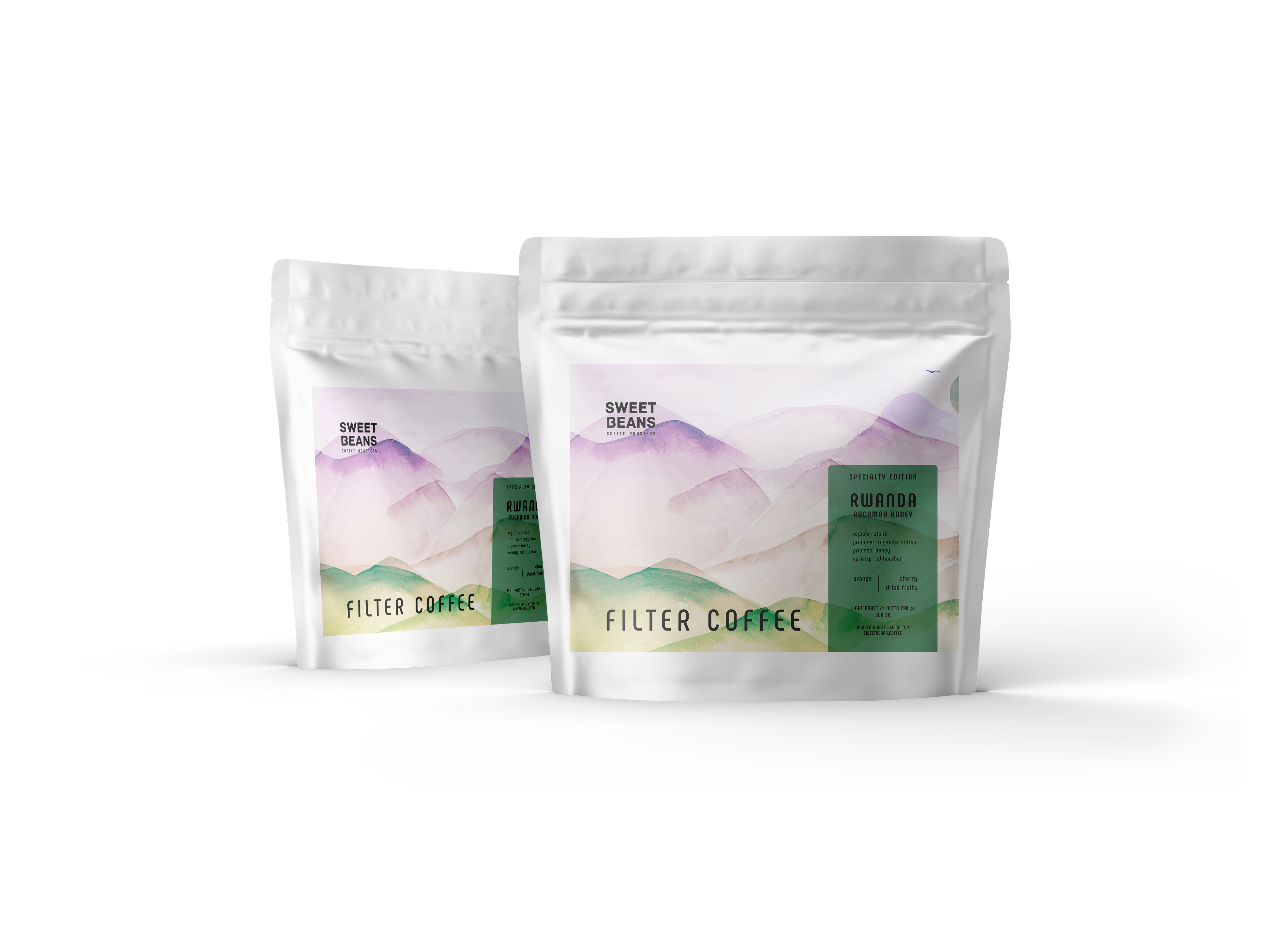
Rwanda Rugamba | honey
Price range: 14,00 € through 49,00 €
Rugamba Wet Mill was constructed in 2009 and is located on the shores of Lake Kivu in Rwanda. The station processes coffee cherries grown on the surrounding hills at high altitudes, where the trees benefit from rich volcanic soil and a favorable microclimate.
Primary flavour note: Orange, cherry, dried fruits, marzipan, dark chocolate
Rugamba Wet Mill was constructed in 2009 and is located on the shores of Lake Kivu in Rwanda. The station processes coffee cherries grown on the surrounding hills at high altitudes, where the trees benefit from rich volcanic soil and a favorable microclimate.
The station is equipped with a three-disc McKinnon pulping machine, fermentation tanks, and raised drying beds. Rugamba receives coffee cherries from more than 1,500 smallholder farmers in the surrounding area.
In 2016, Rugamba was acquired by RTC (Rwanda Trading Company) after the station had been inactive for four years due to management issues under its previous ownership.
Although the station has the capacity to process cherries equivalent to more than six containers of green coffee, strong competition for cherries in the region means that Rugamba typically processes three to four containers per season.
Processing – Honey Process
After harvest, the coffee cherries are pulped to remove the outer skin. Unlike washed processing, however, some or all of the sticky mucilage (which has a honey-like texture) is intentionally left on the beans during drying.
The beans are then spread on raised drying beds, where they dry for approximately 20–25 days with the mucilage still attached. During this time, sugars from the mucilage slowly absorb into the beans.
This process often produces a cup profile that combines the clarity and brightness of washed coffees with the sweetness, body, and fruit-forward characteristics of natural coffees.
| Weight | 0,200 kg |
|---|---|
| weight | 200 gr., 500 gr., 1000 gr. |
Related products